“I don’t check my phone when I feel unsafe.”
Experts told us the most dangerous moments are exactly when the phone is least accessible.
01
Designing a proactive safety system for women who enter a stranger’s home every single day and deserve more than a panic button.
The problem
Our Experts, women home-service workers walk into unfamiliar homes every single morning. The industry’s only answer had always been the same: a small SOS button buried inside an app.
It assumed that in a moment of real danger, she’d have the time, the calm, and the access to find it and press it. That assumption was dangerously wrong.
Research
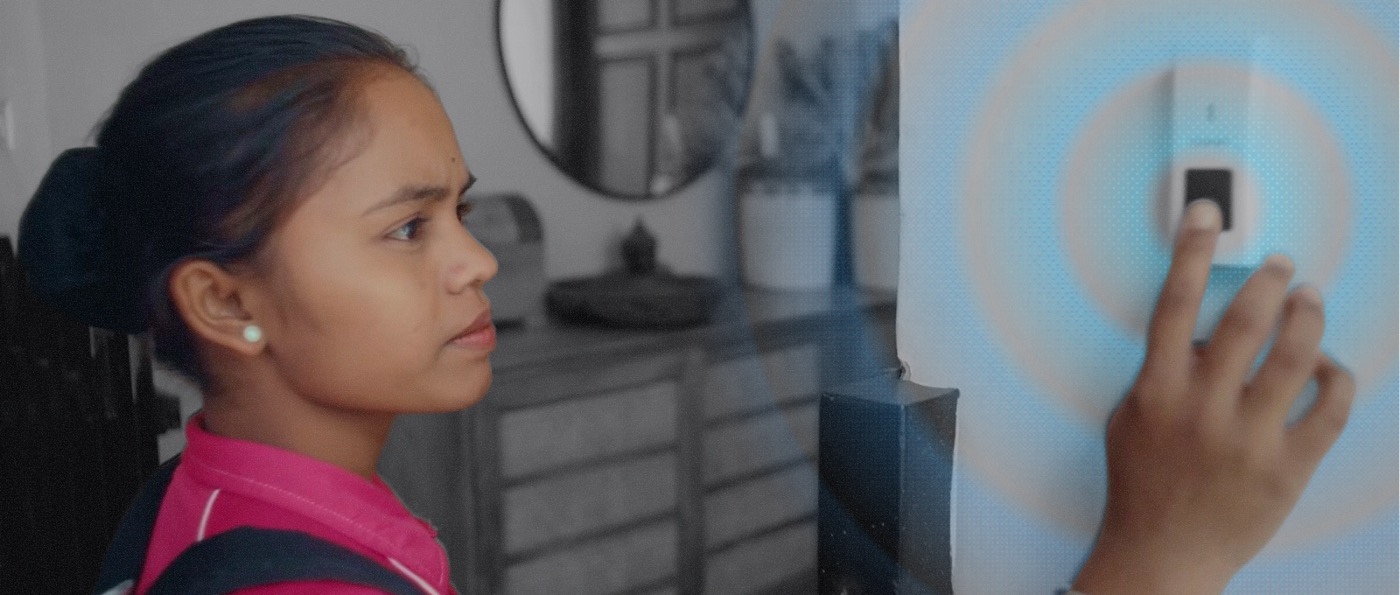
We spent time with our Experts — not in conference rooms, but in the real context of their work. What we heard reshaped everything.
Experts told us the most dangerous moments are exactly when the phone is least accessible.
01Distress rarely comes with a clear moment to act. The system needed to read the room, not wait for a tap.
02Experts didn’t want to escalate every discomfort. They wanted to feel watched over, so they could focus on their work.
03
Design process
We spent time with our Experts not in conference rooms, but in the real context of their work. What we heard reshaped everything.
We moved away from “press on emergency 😱” and toward ambient awareness. The Expert activates Kavach at any point of a booking; one intentional moment, not a frantic scramble.
Once active, Kavach runs in the background, monitoring audio patterns and device movement for distress signals. When an anomaly is detected, Kavach quietly checks in: “Are you okay?” A simple tap confirms safety; if not it escalates immediately.
Triple tap on volume buttons trigger SOS even on a locked screen. Our ops team receives the alert in near real-time. The Expert never has to navigate an app under pressure.
Outcome
Kavach launched on International Women’s Day, March 2026. The response from Experts, the industry, and media affirmed the design philosophy.

Kavach was made open source so any platform in the gig economy can adopt it, because this problem isn’t unique to Snabbit.

Experts reported feeling protected during bookings in a way that no previous tool had achieved. Safety became a tangible, felt experience.

The safety team now responds to distress alerts in near real-time, not after a formal complaint, not the next day. In the moment.

Before Kavach, safety in home services meant a button. After Kavach, it means a system and competitors now face a new bar.
Reflection
Kavach wasn’t born in a design sprint. It started with a question the team refused to stop asking: what does it actually feel like to be her? I didn’t design a feature. I designed trust — the kind that travels with her into every room, every home, everyday.